Companies and individuals
Bulgaria applies a standard corporate income tax rate of 10%, as indicated by the Bulgarian National Revenue Agency. This figure does not, however, describe a business’s or its shareholders’ entire tax burden. The taxable base, special regimes, distributions, withholding taxes and contributions require separate examination. For individuals, the nature of income and the taxpayer’s circumstances may result in different treatment: not every receipt is indiscriminately subject to the same rate.
Residence and organisation of the business
In relationships with Italy, it is necessary to establish where the company’s administration, management and activities actually take place. Registering a company abroad does not, by itself, resolve questions of tax residence, permanent establishment and filing obligations. Relationships between connected companies, financing and directors’ remuneration must also reflect the actual organisation and be documented. Coordination between the two legal systems is an integral part of planning the business.
VAT, profits and the bilateral convention
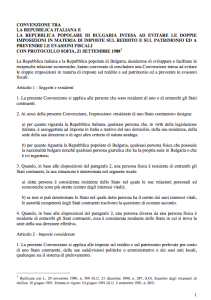
VAT obligations depend on the types of transactions and parties involved, as well as the conditions for registration. Domestic transactions, cross-border supplies and services should not be treated as equivalent situations. For dividends and other payments, the nature of the recipient, exemptions, withholding taxes and applicable treaties must be checked. The Italy–Bulgaria double taxation convention must be examined in relation to the particular income: it does not introduce a general exemption for every economic relationship between the two countries.
A documented check
The Firm addresses the legal aspects of the transaction and coordinates with the appointed tax adviser or accountant on the obligations within their remit. The assessment begins with expected flows, contracts, parties involved, the place where decisions are taken and the resources deployed. Refunds, reliefs and incentives are not automatic outcomes: they require qualifying conditions and documentation. Information in the website’s earlier publications must be understood in its original period and updated before being used for current decisions.