How to read this article today
The positions reported belong to that edition and do not represent the current ranking. Judgments about economic systems are the author’s views in their historical context; they must be distinguished from measured indicators and from the assessment of a specific initiative.
The text of the original article
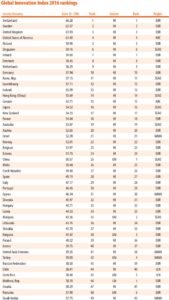
The Global Innovation Index 2016 (GII) helps create an environment in which the drivers of innovation are continuously assessed.
The many assessment factors contributing to the Global Innovation Index allow an analytical understanding of a country's strengths, weaknesses and growth prospects.
Switzerland also retains first place in the 2016 world ranking, followed by Sweden, the United Kingdom and the United States.
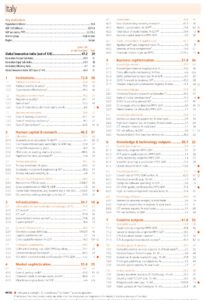
Italy has enormous potential which, unfortunately, is undermined by poor, if not non-existent, economic planning and business culture. It now suffers from unjustifiable delays in infrastructure, training, access to credit and taxation, to name just a few areas.
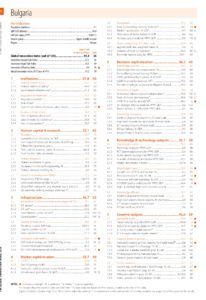
Bulgaria is undoubtedly an emerging country. Reaching 38th place in the world ranking within just a few years clearly recognises its efforts to create a domestic economy on a par with other European States. Among the sub-indices, its excellent Innovation Efficiency Ratio performance stands out.
Legal advice in Bulgaria, Italy and Albania, international law firm