
The text of the original article

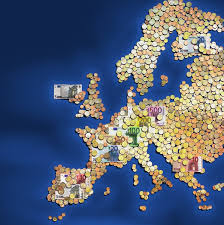
Italian small and medium-sized enterprises are finding it increasingly difficult to operate in European and international environments. There is clearly a lack of basic understanding of how to use the opportunities offered by accelerating globalisation. Moreover, the national system does not help the 70% of small and medium-sized entrepreneurs who constitute the country’s true wealth to access international markets.
Governments' only real interest is to strengthen the trade balance, in other words to sell domestic products abroad.
This underlying policy, now clear in political programmes, brings obvious contradictions with the original European project, which was not intended to serve mercantilist thinking.
In any event, it is worth looking around and giving favourable consideration to the opportunities offered by Eastern European countries.
Bulgaria, at the centre of the Balkans, offers good development prospects for both financial and productive investments, in view of strengthening consumption in the surrounding area (thanks to economic growth above the European average) and the possibility of using various strengths that encourage entrepreneurs to take an interest in Bulgaria.
The strengths are as follows:
1) Political stability: guaranteed by Bulgaria’s membership of NATO since 2004 and of the European Union since 2007. EU membership is fundamental for operators within the Community. The free movement of people, capital, goods and labour within the Union is a guiding principle of the union of the European people. It gives the entrepreneur-investor assurances of uniform legislation and legal protection, while also guaranteeing a secure development trend in Europe’s peripheral countries, which will grow much faster in the coming years to converge with the common market;
2) The lowest taxation in the Union. Since 2008, Bulgaria has operated a simple, modern tax system: both individuals and legal entities are subject to a 10% flat tax, while dividends are taxed at 5%; no taxes on production are provided for.
3) Low-cost electricity: despite the price increases of recent months, electricity in Bulgaria is the cheapest in the entire Union. Bulgaria produces surplus electricity and can therefore export it. Low energy costs further enhance the competitiveness of manufacturing activities.
4) Low labour costs: Bulgaria has the lowest labour costs in the entire 28-country European Union. Bulgarian workers deliver excellent results when trained, motivated and properly paid.
5) Low logistics costs: thanks to European funds, Bulgaria has developed extensive industrial areas, and others are under construction. The low cost of logistics facilities avoids heavy financial burdens during the start-up phase.
6) Low start-up costs and speed of implementation: setting up a limited-liability company in Bulgaria is straightforward and inexpensive. The Bulgarian Chamber of Commerce is fully computerised and incorporation costs are very low. Despite the simplicity of the basic rules, it is always advisable to seek professionals working to high standards to create the company best suited to your needs.
7) Motivated, educated young people: Bulgaria has good universities throughout the country. Many young people have studied or worked abroad more than once, and a good command of English is widespread. They are eager to work and aspire to the consumption and living standards of their European peers, making them extremely motivated. Foreign investors will find it easy to recruit qualified staff.
8) In the heart of the Balkans, it is a strategic crossroads between Europe, Southeast Asia, Turkey and Russia. Trade is supported by Bulgarian entrepreneurs' long-standing tradition of international commerce.
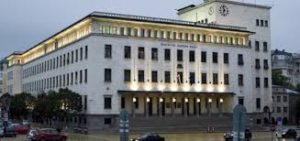
9) Monetary stability: the Bulgarian lev is pegged to the euro through international agreements at a fixed exchange rate of €1 = 1.955 LEV
10) Economic stability: Bulgaria has very low public debt, which should not exceed 20% of GDP in 2014 either. Despite the economic crisis that has gripped Europe since 2009, Bulgaria has not become indebted and has contained public spending without borrowing. The absence of an excessive deficit means that Bulgaria is free from banking pressures and can afford to grow without being held to ransom. Bulgaria also complies with EU deficit-to-GDP limits and, in the coming years, will be able to focus on development, research and infrastructure without resorting to tax expropriation to honour European commitments to restrain public spending and reduce public debt, which weigh heavily on the economic recovery of the leading European economies.